

Contemplations – 15
I'm incurably curious about many aspects of this journey of ours. Here are a few noteworthy items I've stumbled across that I'm making a note of so I can revisit them from time to time.
Quick links to this page's content ∨
Appetizers:
"Many of the actions by which men have become rich are far more harmful to the community than the obscure crimes of poor men, yet they go unpunished because they do not interfere with the existing order."
– Bertrand Russell, Proposed Roads to Freedom: Socialism, Anarchism and Syndicalism, published by George Allen & Urwin, London, 1918.
"The test of our progress is not whether we add more to the abundance of those who have much; it is whether we provide enough for those who have too little."
– President Franklin D. Roosevelt, Second Inaugural Address, January 20th, 1937.
2026
Abolish ICE!

Photograph courtesy of Glenn Goldin
The crimes of ICE continue, as well as their cowardly coverup of their outrageously criminal activity. They must be stopped. Hopefully, our new congress will take responsibility and hold this agency accountable for its shameful actions.
The violent ICE detention of a US citizen with disabilities as he walked to his high school has sparked outrage in California where leaders are condemning the incident as racial profiling and calling on authorities to investigate.
Erik Zepeda, a 20-year-old high school student, was stopped by Immigration and Customs Enforcement (ICE) officers last month in the small agricultural city of Santa Maria, famed for its strawberry harvest, where 79% of residents are Latino. His wrist was broken and later required surgery.
Zepeda, who has disabilities that affect his physical reflexes and ability to communicate verbally, told the Guardian in writing that he was "walking to school the same way I do every day" when the ICE agents "tackled me and handcuffed me (and) hurt me".
"I thought they were going to kill me," Zepeda said. "I did not do anything wrong, and they should never have done that. I don't want this to happen to anyone else."
An ICE-watch observer who witnessed the incident unfold on 21 October told the Guardian that masked ICE agents approached Zepeda from behind, pinned him face-down on the ground and put him in a car. The agents then drove the student around for a while before letting him out. With a black eye and his wrist in severe pain, Zepeda walked the remaining half mile to his school, where staff called an ambulance.
…Cooney and Gaston, Zepeda's attorneys, said that his hospital discharge records confirmed that he received surgery for his fractured wrist after the incident.
"ICE agents illegally assaulted Mr Zepeda and then issued a false public statement to cover it up," the attorneys said.
Outcry after ICE violently detains US citizen walking to high school: ‘I thought they were going to kill me'⩘ by Jackie Botts, The Guardian, Nov 5, 2026.
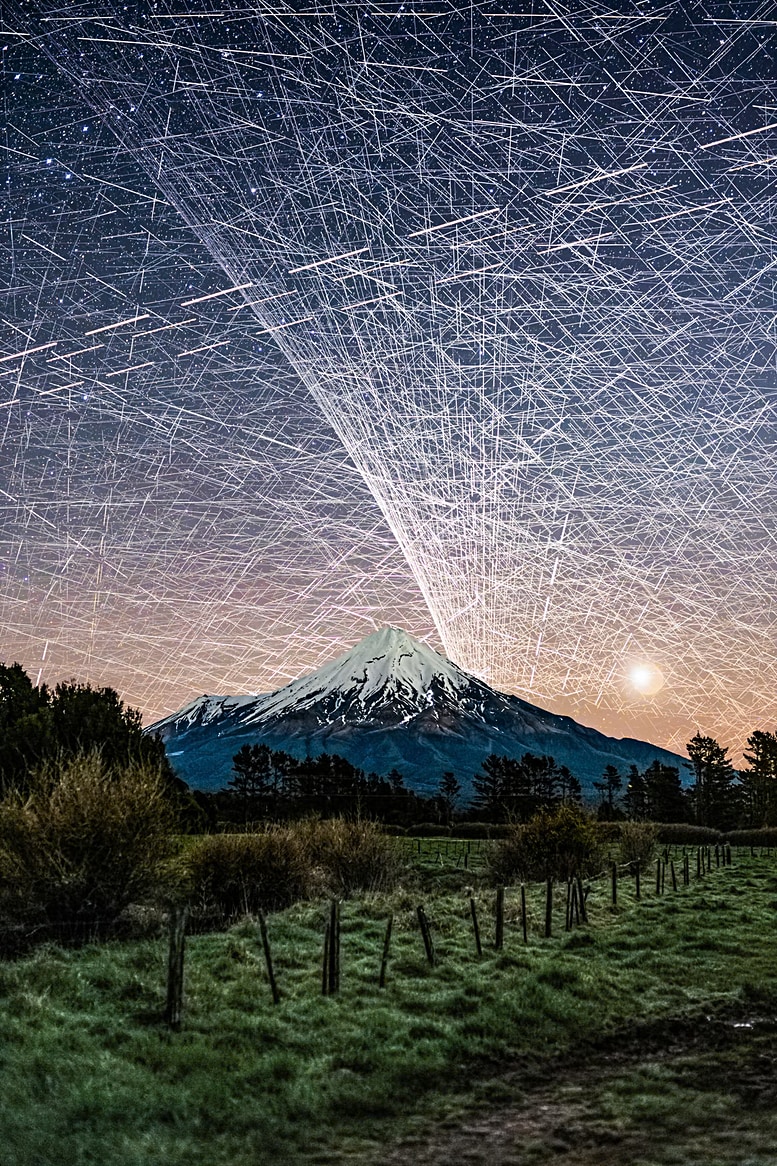
The stunning pollution of our sky
Photograph by Brendan Larsen
This stunningly tragic image of satellites criss-crossing our night sky was created by New Zealand photographer Brendan Larsen. It shows about 1,400 satellites and 14,000 satellite trails that occurred during a two-hour period.
A photograph showing thousands of satellites cross-hatching the night sky over New Zealand appeared so extraordinary the astrophotographer who captured it is fighting accusations it was created by AI.
To create his spectacular image – now viewed millions of times online – Brendan Larsen spent two hours in September snapping hundreds of photographs of the night sky over Mount Taranaki in the North Island.
In the actual article there is a second copy of the image that is a timelapse that can be played, which clearly reveals the alarming level of the pollution of our skies.
The night-sky image so incredible the NZ man behind it has been accused of using AI⩘ by Eva Corlett in Wellington, The Guardian, Nov 3, 2026.
Fighting for a more compassionate world

I came across a wonderful website this morning: American Humanist Association⩘ , which has the byline "Fighting for a More Compassionate World". I found it after seeing a Mastodon post by Tom's Hardware⩘ about a "research administrator at the University of Kentucky [who] was granted a Title VII exemption, allowing them to not use AI tools as it goes against their moral beliefs", which are based in humanism.
The referenced Tom's Hardware article⩘ explains further:
David Durman, a research administrator at the University of Kentucky (UK), has successfully argued that using AI violates his beliefs as a humanist and has received Title VII religious accommodation from university officials not to use the technology. According to the Religion News Service (RNS), Durman believes in "the human part of life," which includes making his own decisions. However, he says that when the UK asked its employees to use AI, he felt that doing so would mean outsourcing his thinking to tools like ChatGPT and Microsoft Copilot, thus violating his deeply held beliefs.
"The process and work involved in thinking through situations, through my work, through my ethics, through the way I handle other people, is a key component in being able to develop myself as a moral person," Durman told RNS in an interview. "And offloading that labor, regardless of whether it's taxing or not, is undercutting my ability to be a moral actor." Because of this, the research administrator was granted a Title VII exemption under the Civil Rights Act of 1964, which prohibited employment discrimination based on race, color, religion, sex, and national origin. While humanism is often a non-religious philosophy or a worldview, federal courts have ruled that it qualifies as a religion.
Bravo!
The American Humanist website explains what humanism is (and isn't):
Humanism is a movement for change grounded in reason, compassion & shared humanity.
Humanism is a progressive, non-theistic belief system that says we can all live good, meaningful lives if we focus on making things better in the here and now.
At the heart of Humanism is a powerful conviction: every human being has inherent worth and dignity. Humanists believe that our highest responsibility is to each other, and that we have a duty to do right in this one life – not because we expect recognition, but because we have the power to create a better world through our actions.
Humanism has been a natural home for atheists, agnostics, the non-religious, skeptics, and people questioning their relationship to dogma and authority. But Humanism doesn't seek to oppose or end organized religion – we're here to create a compassionate society that works for everyone, regardless of their beliefs.
They further explore humanist values in ten key areas⩘ :
- Altruism
- Critical thinking
- Empathy
- Environmentalism
- Ethical development
- Global awareness
- Humility
- Peace & social justice
- Responsibility
- Service & participation
Aligns so beautifully with my personal values.
We've known the answer for decades
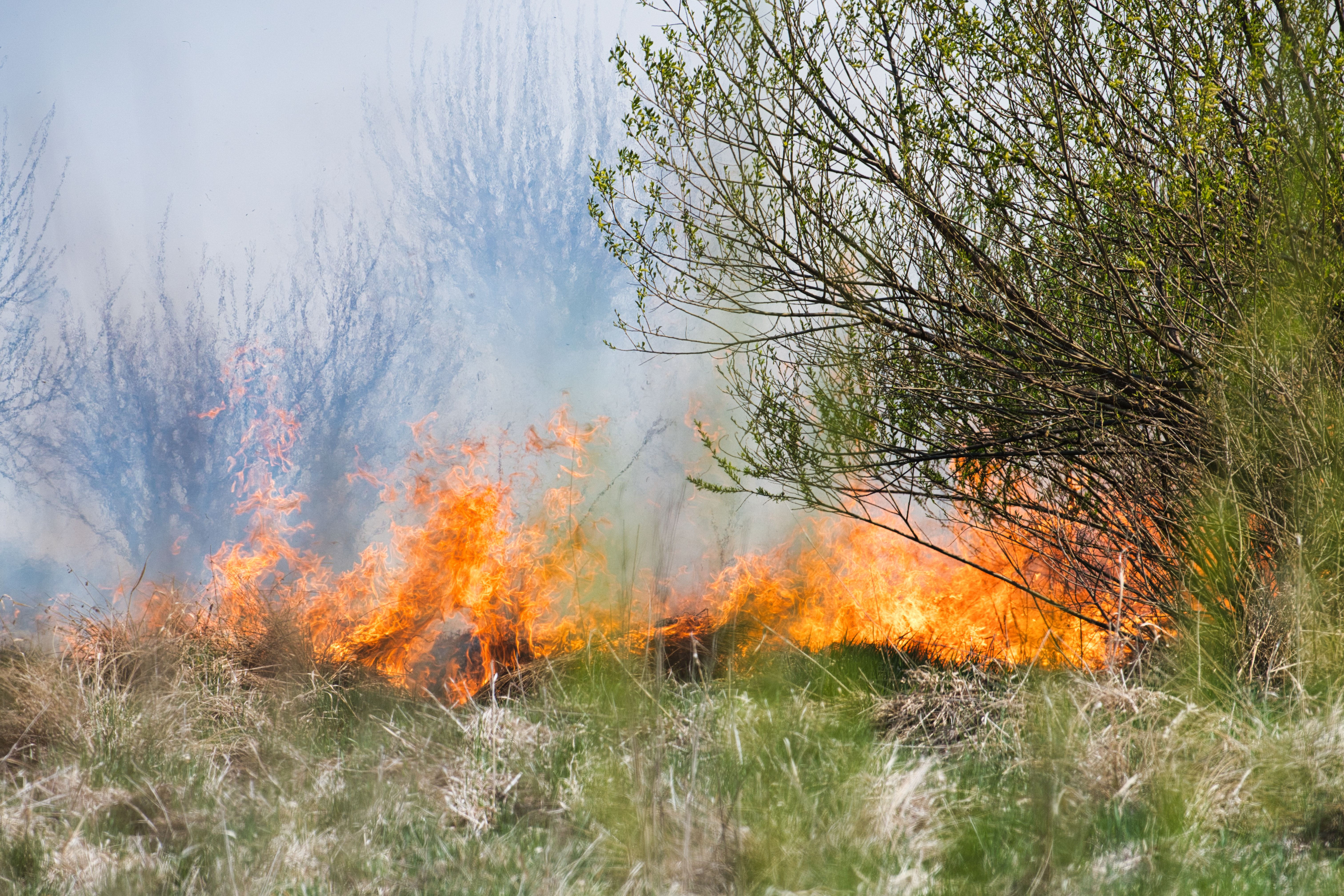
Photo by Michal Petráš, Pexels⩘ .
Twenty years ago, a 700-page report published by Nicholas Stern used standard economic tools and methods to underscore three economic conclusions:
- The costs of inaction on the climate are greater than the costs of action.
- The climate crisis is a market failure.
- Economic growth is compatible with cutting greenhouse gas emissions.
So far, we've ignored these clear conclusions and have allowed ongoing devastating damage to our home planet. In fact, in the U.S., we have a administration that is actively making things worse in order to enrich the wealthy businesses run by greedy businessmen who profit off the destruction of our planet.
In a press release, the Environmental Protection Agency (EPA) administrator, Lee Zeldin, praised what he called Trump's move "to end the war on oil and natural gas" by revising oil and natural gas regulations under the Clean Air Act. The proposal is expected to produce an estimated 210m additional barrels of oil and 1.41tn cubic ft of natural gas, according to the EPA.
The EPA's proposal violates the Clean Air Act's duty to protect public health and welfare and would seriously harm communities near oil and gas development, as well as the wider public, said Darin Schroeder, the methane legal and regulatory director at Clean Air Task Force (CATF).…
Since the EPA announced it would no longer enforce oil and gas regulations in March 2025, oil and gas operators have leaked, vented or flared $7bn worth of natural gas, according to calculations by the Environmental Defense Fund.
Rosalie Winn, senior director and lead counsel at the Environmental Defense Fund, said the Trump administration was seeking to curtail the federal government's ability to do anything to address climate pollution across all of the largest sectors responsible for emissions.
"What this administration is doing is enabling the worst polluters in the industry to continue to make ever more money off the back of American consumers while they're wasting energy," she said.Trump says government to 'terminate' Biden-era methane emissions rules: Critics warn of climate danger as president in Texas claims change will save companies and consumers billions⩘ by Sara Sneath, The Guardian, Oct 28, 2026.
The stupidity and greed on display is appalling. We are committing global suicide.
The climate crisis will destroy our economies – we learned this 20 years ago. When will we act? ⩘ by Fiona Harvey, The Guardian.
Planetary boundaries necessary for flourishing of life have been massively breached
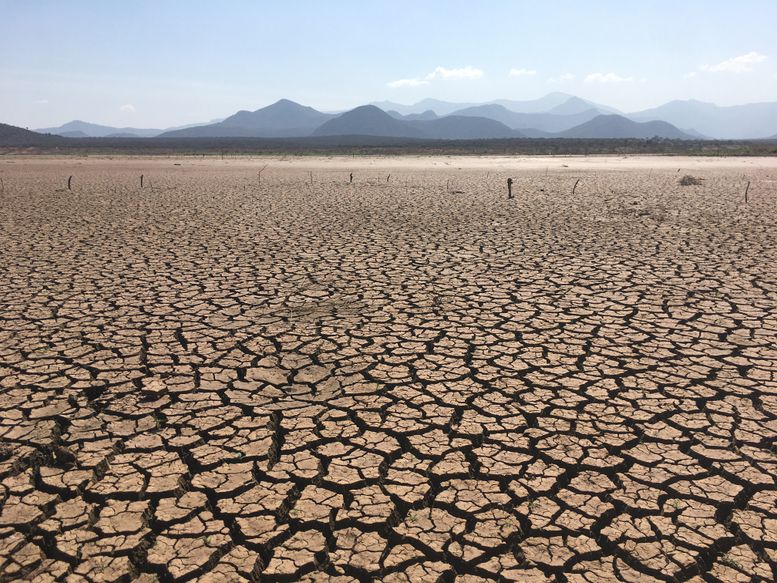
Photo by Vladyslav Dukhin⩘ via Pexels.
We are living in absolutely insane times. We are killing our home. At the same time, our idiotic president is urging more burning of fossil fuels and is canceling desperately needed renewable energy projects. So fucked up.
The planetary life support systems relied upon by humans have deteriorated to their worst levels ever recorded amid ongoing pollution and habitat destruction, according to a key yet grim annual update by scientists.
Of the nine "planetary boundaries" that help determine whether life can flourish on Earth, seven are being breached at their highest ever levels of transgression, according to the latest planetary health check, a process that was established in 2009.
The seven key indicators in the danger zone include climate change, change in biosphere integrity, land system change, freshwater change, modification of biogeochemical flows, introduction of novel entities and, for the first time last year, ocean acidification.
…The report comes on the heels of a series of extreme events around the world in the past year that scientists say have been made far more likely by the upending of our environment.
Huge floods hit Pakistan last year, while this year has seen record heat and wildfires across Europe, the hottest ever summer in the US, and a disastrous flood on the Tibet-Nepal border. The oceans, which are absorbing much of this extra generated heat, have hit new temperature records.
"These are not separate emergencies; the planet is telling us, in every region at once, that it is out of balance," said Hindou Oumarou Ibrahim, chair of Planetary Guardians, a coalition of scientists, business leaders and activists.
'Planetary boundaries' necessary for flourishing of life have been massively breached, scientists warn: New report shows key indicators of Earth's health are 'outside the safe operating space' as climate disaster looms⩘ by Oliver Milman, The Guardian, Sep 21, 2026.
The Lion's Head Nebula

I don't like many of the images produced to the James Webb Space Telescope, mainly because of lot of them are, I think, in the infrared spectrum, so everything looks reddish. I much prefer the visible-light images produced by the Hubble telescope. But I really like this one (I've cropped it a bit to focus on the nebula). To me, it looks like a rough-cut diamond floating in deep space.
From a NASA explanation⩘ of the image:
At first glance the nebula's overall structure in Webb's infrared images, with both the NIRCam (Near Infrared Camera) and MIRI (Mid Infrared Instrument) instruments, may look quite similar to Hubble's earlier visible-light view. However, Webb's infrared vision highlights features like compact clumps of dust and a haze of ionized gas.
What an amazing universe we live in.
Astronomy Picture of the Day, Aug 26, 2026⩘ .
Universal healthcare

Photo by Pixabay⩘ via Pexels
From the Yale School of Public Health:
A single-payer universal health care system could cover every American, save more than 100,000 lives a year, and still cost $1 trillion less than the system it would replace, according to a new preprint study led by researchers at the Yale School of Public Health.…
The model identified five major sources of savings: lower pharmaceutical prices, Medicare-level payments to providers, reduced administrative overhead, less fraudulent billing, and fewer avoidable emergency department visits and hospitalizations. Even under more conservative assumptions about drug prices and fraud reduction, the researchers projected that the savings would reach at least $663 billion a year. Both figures account for an estimated $304 billion in additional spending to meet unmet medical needs, reimburse care that now goes unpaid, and provide universal dental coverage.
But the CEOs and stockholders of the big healthcare companies and venture capitol leeches would likely make less profit, so I doubt our spineless politicians will ever even consider this kind of proposal.
Universal Health Coverage Could Save $1 Trillion and 114,000 Lives Every Year, Yale Study Projects⩘ by Matt Kristoffersen, Yale School of Public Health, Aug 13, 2026.
See also: Private equity faces existential crisis in US as unsold companies pile up⩘ by Heather Timmons, The Guardian, Sep 4, 2026.
Retail stalwarts Saks and Eddie Bauer filed for bankruptcy. Kmart and JoAnn Fabrics are gone for good, a trail of layoffs and disappointed customers in their wake. Hospital giant Steward Health Care collapsed, costing thousands of jobs and leaving several communities without a local hospital.
These once-trusted US companies have one thing in common: they were owned by private equity investors, who load companies with debt when they buy them and squeeze out profits as they restructure.…
Private equity investors also bought thousands of healthcare facilities in the US in recent years, including non-profit hospice care, rural hospitals and small-town dentists' offices.…
A growing concern is that "eventually, the companies that have accumulated this much debt are going to collapse", said Audrey Stienon, Industrial Policy Program Manager at Open Markets, an anti-monopoly thinktank that is examining private equity's role in the greater economy.
And often, what private equity buys up "are really, really important businesses", Stiennon said, providing jobs or vital services to local communities."When they go down, either you need to bail them out, or you need to find someone to save them, or else you're just stuck with fewer options for consumers down the line."
Nelson Mandela showed us what solidarity means

Photo: © copyright John Mathew Smith 2001 / CC BY-SA 2.0⩘
Source: John Mathew Smith & www.celebrity-photos.com⩘
Mayor Zohran Mamdani gave an inspiring talk about Nelson Mandela, who is also known by his Thembu clan name, Madiba.
Madiba lives in every protest for justice, every call for democracy, every march with a righteous demand. Madiba lives in every township and slum where dignity remains just out of reach, and he lives in each person who reaches for that dignity, who works all day and then returns home with food for the hungry and medicine for the sick. Madiba lives each time someone bears witness to oppression, or want, or misery, and does not accept it as inevitable, but rather as something that we each can fight. So many of us are only where we are today – can only conceive of the principled as possible – because Madiba showed us the path.
Mayor Mamdani gave his talk to commemorate the launch of the Mandela Foundation Global Leadership Forum.
We are together this evening to launch the Mandela Foundation Global Leadership Forum – to continue the struggle for dignity that guided Madiba for nearly a century. We are together to chart a course through the turbulent waters that lie before us – a global landscape roiled by strongmen and corruption, where rights are stolen away in the dead of night and apartheid, in different forms, endures. We are together, all of us, searching for answers, seeking to make sense of these fractures, straining to lead amidst upheaval.
Nelson Mandela held a mirror to humanity – and showed us what solidarity means⩘ , opinion by Zohran Mamdani, mayor of New York City, The Guardian, Jul 18, 2026.
'There's this deep mystery of what, actually, is this thing?'
 Image credit: a cropped version of an illustration by Deena So'Oteh, The Guardian
This is an amazing long read article in The Guardian by Robert P Baird with the title 'There's this deep mystery of what, actually, is this thing?': the philosopher inside Google DeepMind AI⩘ and the subtitle "Since 2017, Iason Gabriel has worked at the tech giant, trying to anticipate – and think through – the impact of AI. But as commercial and geopolitical pressures escalate, can ethicists make any difference?"
It is in-depth articles like this that make paying for a subscription to The Guardian worthwhile!
As I was reading Baird's article, I kept coming across paragraphs that captured so well the ethical challenges underlying AI development. I'll share a few here so that I can easily revisit them, but really, just read the full article … it's truly worthwhile.
More generally, Gabriel has been a leading advocate for the idea that the current wave of AI development demands not just new technical vocabularies but also new ways of thinking about our relationship to technology, and even to ourselves. As he put it to me recently, in one of several long conversations we've had over the past few months, "I can take any technological artefact and ask: is it wise? Is it just? Is it caring? And the answer is no. But the depth of the question when it comes to AI – including what kind of ethics is appropriate to it – is hard to overstate. I sometimes feel like it's very hard to look at AI directly. There's this deep mystery there, which is: but what actually is this thing? We have a very literal answer, but the literal answer doesn't seem to necessarily provide a moral answer."
…Like the DeepMind founders, the AI safety contingent believed that human-grade machine intelligence was not only possible but imminent. The urgent task, as they saw things, was to make sure that AI systems didn't go awry. They took inspiration from a 1960 essay by Norbert Wiener, an American mathematician and computer scientist, who argued that humans and computers are "essentially foreign to each other". Because machines can operate much faster than people, Wiener said, "we had better be quite sure that the purpose put into the machine is the purpose which we really desire and not merely a colourful imitation of it".
…Gabriel's first major research project at DeepMind was a 2020 paper that straddled the concerns of both camps. The paper took the alignment problem seriously, but it also insisted that alignment had ethical and political implications that went beyond the technical challenges. As difficult as it might be to get a machine to act in accordance with some set of values, Gabriel argued, it was much harder to choose those values in the first place. "Given that we live in a pluralistic world that is full of competing conceptions of value," he asked, "how are we to decide which principles or objectives to encode in AI – and who has the right to make these decisions?"
…DeepMind's initial distrust of LLMs was not uncommon. In 2020, Timnit Gebru, a Google Research engineer who had worked with Buolamwini on Gender Shades, co-authored a broadside against the nascent technology titled On the Dangers of Stochastic Parrots. The paper, which eventually became a cornerstone of anti-AI advocacy, made the controversial claim that LLMs could only ever produce technically meaningless text and possessed no more understanding of human language than a parrot does. It also accused the models of wanton energy consumption, rampant and unaccountable bias, and "amplification of a hegemonic worldview".
…Gabriel and his co-authors argued that alignment was not merely a matter of making sure that AI systems acted in accordance with some stable set of preferences, values or principles. Instead, they argued, alignment should be seen as a four-way relationship involving the AI system, the user, developers and society. Framing the issue in this way made it possible to see all the ways in which a misaligned AI might go wrong. An AI trained to favour its developer might cause harm to its user, for example, by not reporting accurate information about the developer's competitors. Or an AI trained to follow its user's instructions too faithfully might cause harm to society, for instance, by helping the user hack into a bank. It was even possible, they argued, for AI systems to be misaligned in a way that harmed users or society without helping anyone.
…The questions Gabriel and his colleagues have raised about the design and deployment of AI are unquestionably good ones, and I got no sense that anyone I met was insincere about their feelings of moral responsibility. Yet it's also the case that the most ethically relevant fact about AI at the moment has less to do with a given model or even a given company than it does with the global situation: first, the fact that AI is the white-hot engine of an incipient arms race between the US and China, and second, that AI may be the fastest-growing industry the world has ever seen.
…At Google's annual developer conference, in May, the deployment of AI across the company's product offerings was treated as cause for celebration. [Google CEO Sundar] Pichai said that the company sees qqAI as the most profound way to advance our mission and improve people's lives at scale". For many people, however, the sudden ubiquity of AI has been some combination of overwhelming, obnoxious and threatening. Nor is it reassuring to discover that the feeling that things are going too fast is shared even by people such as Hassabis, who, on a recent podcast, lamented the "ferocious commercial-pressure race that everyone's sort of locked into". What's happening now, he said, is not how he'd hoped the development of AI would go, "where we would be contemplating this philosophically and carefully considering each next step. We're not in that world."
At this point it seems likely that LLM-powered AI will be at least as consequential as the smartphone, and maybe the internet. But still I can't say that I'm pleased to see a "Write with Gemini" prompt appear whenever I stop for a few seconds to consider my next sentence in Google Docs. Still less am I eager to watch my children be used as guinea pigs for a dizzying new experiment in digital learning, or to discover what will happen to the global economy if the extravagant investments in AI can't generate the short-term returns the markets demand. And while it's not far-fetched to expect AI to enable breakthroughs that would justify the extreme amounts of energy it requires – better batteries, more efficient transmission grids, cures for serious diseases – I also don't think "hope for the best" is a reasonable answer to people concerned about the climate crisis.
'There's this deep mystery of what, actually, is this thing?': the philosopher inside Google DeepMind AI⩘ by Robert P Baird, The Guardian, Jun 30, 2026.
The kids are alright
 Knights of Molino. Photo by Beth LaBerge/KQED.
May 26, 2026: While browsing Mastodon this afternoon, I came across these kids who have formed a punk bank, Knights of Molino, and have released a song about AI titled "Take Back Control". I am impressed! They can really play, and their song is a passionate exploration of the humanity of music.
In fact, the music and lyrics are so good that I was a bit skeptical. I've never before heard kids that young play so well. So I started poking around to see if this was indeed legit. I found them on Bandcamp: Take Back Control by Knights of Molino⩘ .
The Knights of Molino are a San Francisco Bay Area middle school punk band – members are brothers Erik and Tommy Birmingham, and Rowan Campbell.
Then I found their website: Knights of Molino⩘ . Here's the beginning of the lyrics of "Take Back Control""
I won't be a slave to AI
It's time for us all to step out of line
Free your mind and look to the sky
End the code and blind the cyber eyeThere's a crisis in the nation
Gotta break free from the simulation
The truth is music comes from the soul
Unplug, join in, take back controlArtificial Intelligence
Can't know the human experience
Finally, I found an excellent article about them and this song by Jody Amable, KQED. Here's a couple excerpts:
Knights of Molino are a new punk band composed of middle schoolers Erik and Tommy Birmingham, 11 and 13, and Rowan Campbell, 12. They recently reached moderate viral fame for another track in which they didn't shy away from speaking their minds. In October, their scathing takedown of generative AI, "Take Back Control," went spinning across Bay Area and punk-rock TikTok. It's currently at 240,000 views and 2,500 comments: definitely not Mr. Beast numbers, but pretty impressive when you consider none of them even are allowed on TikTok yet.
But those interactions aren't from their peers (at Mill Valley Middle School, rock is out and pop and rap are in, they say). They're mostly from adults inspired to see young people picking up the Bay Area punk torch and rejecting the creep of technology. "AI is taking over the arts and it is vile," agrees one comment. Another: "We need more of this human creativity and true punk." More still are various versions of "the kids are alright."…
For the record, they're not totally anti-AI ("It has [some] good uses," admits Erik), but they're increasingly horrified by its infiltration of music and the inability of many to discern it from the real thing. "The problem is not many people can recognize AI as fake," Erik continues. "And I feel like that's one of the reasons we made the song, [to] help people realize that AI's stealing human thoughts and emotions, and, like, human hard work and time."
"We put emotion and feeling, heart, experiences and all that into writing these songs. But when AI does it, it has nothing to go off of," Tommy adds. "'Cause it's not human. Robot on a screen. How is it supposed to connect with humans?"
A Preteen Punk Band From Mill Valley Takes on AI⩘ by Jody Amable, KQED, Nov 24, 2025.
On superpower suicide and the recovery of justice
 Photo by Alexandru Taradaciuc⩘ from Pexels
An excellent essay by Timothy Snyder.
Empires have risen and failed before, but to my knowledge no state has ever chosen to kill its own power, and succeeded with such rapidity.
Snyder explores this suicide in thirteen areas:
- Statehood
- National interest
- Succession
- Elites
- Education
- Science
- Energy
- Technology
- Diplomacy
- Alliances
- The international system
- The idea of victory
- Finances
Almost every day when I read the news about the current administration is doing, I think to myself and sometimes exclaim out loud, "This is fucking insane!" Every week, when I protest what is happening, I hold up a sign. The current one: "Restore Sanity!"
Snyder captures a crystal clear snapshot of this current insanity through the thirteen areas he discusses, as well as what it would take to restore or achieve sanity. Finally, he provides a clear and powerful conclusion.
The systems that made the United States a superpower cannot be rebuilt as they were, nor should they be: they involved structural injustices that made the present attempt at self-annihilation possible. From where we stand now there are two ways forward: one is the self-induced downfall of the American republic; the other is to reconsider American ideals and to restructure American politics so as to bring the people greater power over a more just future.
On superpower suicide and the recovery of justice⩘ by Timothy Snyder, Thinking About, May 9, 2026.
See also: 'My ambition is to change the country,' AOC says when asked about seeking higher office in 2028⩘ by Edward Helmore, The Guardian, May 9, 2026.
"My ambition is to change this country. Presidents come and go. Senate, House seats, elected officials come and go. But single-payer healthcare is forever," she added, in reference to the kind of national healthcare platform she has long supported over the private system entrenched in the US.
Ocasio-Cortez then ran through a litany of her other signature policy positions, saying: "A living wage is forever, workers' rights are forever, women's rights, all of that, and so anyways … to a finer point to your question is that when you aren't attached, when you haven't been like fantasizing about being this or that since the time you were seven years old, it is tremendously liberating."
Later in the exchange, Ocasio-Cortez said she wanted to "make decisions from a place of how are we going to change the country".…
She added: "I make decisions by waking up in the morning, looking out the window and observing the conditions of this country. And saying what move or what decision can I make today that is going to get us closer to that future, stronger, faster, better than yesterday."
A glimmer of climate action hope
 Photo by Markus Spiske⩘ , Pexels.
Frustrated by the UN COP Climate Change Conferences that have been hijacked by fossil fuel lobbyists leaving them mostly meaningless, nearly 60 countries came together in Santa Marta, Colombia for an independent meeting and agreed to "back voluntary roadmaps to wean world off coal, oil and gas".
The approach marks a departure from the annual UN climate negotiations, which have run for more than three decades even as greenhouse gas emissions have continued to rise.…
Irene Vélez Torres, Colombia's environment minister and chair of the talks, said: "We decided not to resign ourselves to an economy built on the destruction of life. We decided that the transition away from fossil fuels could no longer remain a slogan but must become a concrete, political and collective endeavour"
'Historic breakthrough': Colombia climate talks end with hopes raised for fossil fuel phaseout⩘ by Fiona Harvey and Jonathan Watts in Santa Marta, The Guardian, Apr 28, 2026.
What a gift this life is

I've seen so many versions of the recent photos of the Earth setting behind the moon taken recently by the astronauts as they were circling the moon. They were cropped in various ways, but all of the ones I saw shared one thing: they were cropped so that the Earth was the most significant element of the photo.
Then I came across a version that I think shares a more realistic perspective: A New View of the Moon⩘ .
The events of our world can feel so overwhelming, a head spinning cacophony of chaotic drama: political upheaval, hatred expressed in so many different ways, wars, the disruption of AI, climate change….
Then I look at a photo like this and I get a glimpse of a totally different perspective. Here we are on this little planet floating in the vastness of our solar system, which is rotating within our enormous galaxy with its billions of stars, which is just a tiny dot within the almost inconceivable vastness of our universe with its trillions of galaxies.
What a gift this life is. How I wish we treated it with gratitude and reverence, and with the humbleness that our position in our vast universe warrants.
A New View of the Moon⩘ , image credit: NASA, art002e009287, April 6, 2026.
See also: Perspective: Our home in this wondrous universe⩘ .
The Spanish Dancer Galaxy
 Image Credit: ESA/Hubble⩘ & NASA⩘ , D. Calzetti⩘ & the LEGUS⩘ Team⩘ , R. Chandar⩘
Time to take a deep, calming breath and for a few moments look upwards away from our tiny home on this planet besieged by so many human-caused calamities, and to behold the near infinite grace of our immense home. If only we could learn to dance more in harmony with our universe.
NGC 1566: The Spanish Dancer Galaxy⩘ , Astronomy Picture of the Day, Mar 16, 2026.
Sacred bridge

Woodblock print of Sacred bridge by Yoshida Hiroshi, 1937
As our world gets crazier and crazier, I sometimes find moments of solace contemplating serene works of Japanese art like this woodblock print, Sacred bridge by Yoshida Hiroshi, 1937.
Meeting the climate challenge with collective action
 Photo by Pixabay via Pexels⩘
A bit of hopeful news in our challenging current environment.
A Nobel laureate's environmentally friendly invention that provides clean water if central supplies are knocked out by a hurricane or drought, could be a life saver for vulnerable islands, its founder says.
The invention, by the chemist Prof Omar Yaghi, uses a type of science called reticular chemistry to create molecularly engineered materials, which can extract moisture from the air and harvest water even in arid and desert conditions.
Professor Yaghi was inspired by his own challenging childhood:
Yaghi, who grew up in a refugee community in Jordan, said he was inspired by the hardships he endured in a home with no running water or electricity. Giving his Nobel prize banquet speech, he recalled water arriving to his desert community from the government once every week or two.
"I remember the whisper through our neighbourhood, 'the water is coming', and the urgency as I rushed to fill every container I could find before the flow stopped."
Professor Yaghi challenges us to meet the moment with collective action:
Describing the invention as "a science capable of reimagining matter" he urged leaders to "remove barriers, protect academic freedom" and "welcome global talent".
"On climate, the hour for collective action has already arrived. The science is here. What we need now is courage – courage scaled to the enormity of the task – so we may gift the next generation not only carbon capture, but a planet worthy of their hopes," he said.
'Reimagining matter': Nobel laureate invents machine that harvests water from dry air⩘ by Natricia Duncan, Caribbean correspondent, The Guardian.
Enduring the climate of tomorrow

Photo by Blake Sharp-Wiggins, The Guardian.
Environment and climate correspondent Graham Readfearn visited the Heat and Health Research Centre at the University of Sydney and shares his experience of walking in an environment that simulates extreme heat in shade and direct sun, as well as at high levels of humidity. It's frightening, it's already happening in our world, and it's going to get worse in our future, and far worse in the future of our children.
Around the world, global heating is already giving us more frequent heatwaves, and when we get them they are lasting longer and bringing more heat.
As burning fossil fuels adds more and more heat to the planet, climate scientists know these trends will get ever more deadly.
According to the medical journal the Lancet, heat extremes caused an estimated 546,000 deaths every year between 2012 and 2021 – a 63% rise on rates seen in the 1990s.
We are sleep walking our way into a devastating future. Wake up!
Extreme heat lab: Enduring the climate of tomorrow⩘ by Graham Readfearn, The Guardian, Feb 20, 2026.
Related video: The unbearable experience of walking in a heatwave of the future⩘ .
A winter moment of calm
 Yuki no Kinkakuji (Kinkakuji in Snow) by Hasui Kawase, 1922
My experience of life these days is often overwhelmed by the chaos of politics, the suffering of civilians subjected to brutal wars, the pain of immigrants being rounded up and deported in a heartlessly cruel fashion, and the deterioration of our climate that so often now results in horrible storms and destruction (last night I barely slept as fierce wind gusts slammed into our home again and again).
In moments like this, I'm so grateful when I come across something like this woodblock print, Yuki no Kinkakuji (Kinkakuji in Snow) by Hasui Kawase, 1922. I can sit quietly, take slow breaths, allow myself to be drawn deeply into the calm the image exudes, and at least partially recharge my energy.
Swearing an oath to our constitution
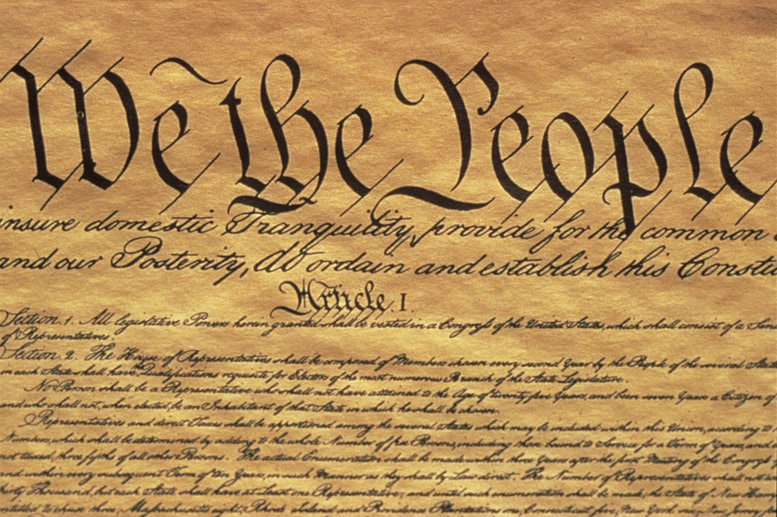 United States Constitution with its preamble "We the People"
Government of the United States of America
Photo⩘ by Joseph Sohm⩘ ; licensed via Shutterstock
I admire the leadership of retired Maj Gen Paul Eaton who is speaking up in defense of our constitution and against the ongoing effort to politicize our armed forces.
Maj Gen Paul Eaton has sounded the alarm, saying in an interview with the Guardian that the effort to bend the higher echelons of the military to the US president's will was unparalleled in recent history and could have long-term dire consequences. He warned that both the reputation and efficiency of the world's most powerful fighting force was in the balance.
"There is an active effort to politicise the armed forces," Eaton said. "Once you infect the body, the cure may be very difficult and painful for presidents downstream."
I'm hoping that many people, both military and civilians, listen to his message.
Trump push to politicize US military 'reminiscent of Stalin', top general warns⩘ by Ed Pilkington, The Guardian, Jan 5, 2025.
